One-on-one consulting sessions with experienced advisors who understand the Nigerian education landscape and the demands of top international universities.
No two students are the same — your background, ambitions, and constraints are unique. That's why every PB Cambridge consulting engagement begins with a deep-dive discovery session to understand you, before any advice is offered.
Whether you're a secondary school student planning ahead, a graduate seeking a Master's, or a professional considering an MBA — we build a strategy specifically for your situation.
Comprehensive review of your academic record, test scores, extracurriculars, and career goals.
A clear, step-by-step plan covering test prep, applications, funding, visa and pre-departure.
A curated list of safety, target, and reach schools matched to your profile and budget.
Regular check-in sessions to keep you on track through the entire admissions cycle.
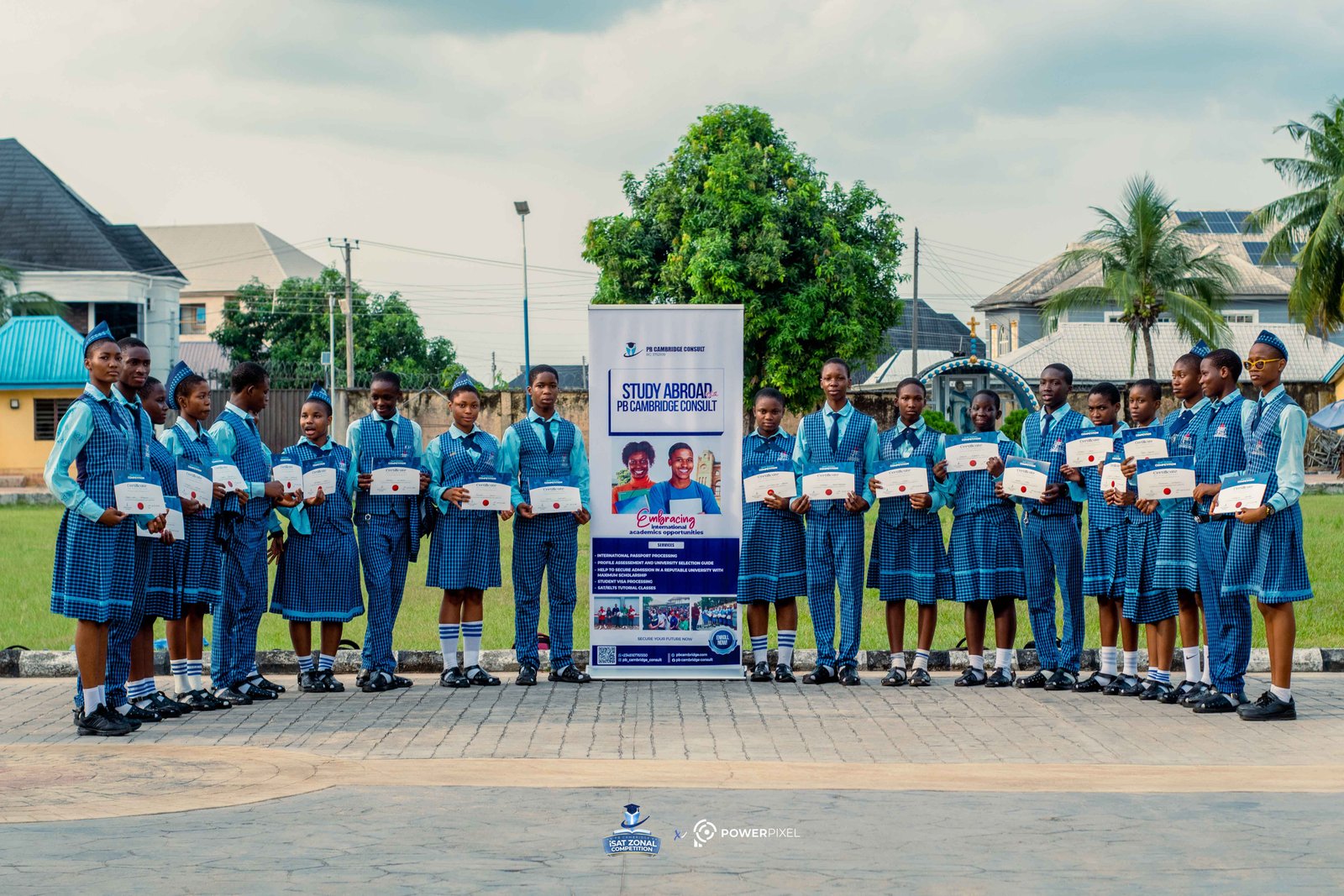
Flexible packages designed to meet you at whatever stage of the journey you're on.
Discovery Session
End-to-End Service
Students who begin working with us in SS1 or SS2 (typically ages 14-16) have a significant advantage over those who start the process in their final year. Early consultation allows us to help shape course selections, extracurricular involvement, and standardized test preparation timelines in ways that strengthen a student's profile years before applications are even submitted.
For example, a student aiming for competitive STEM programs benefits from guidance on which advanced courses to prioritize, which academic competitions (including PBC iSAT) to participate in, and how to build a portfolio of relevant extracurricular activities — robotics clubs, science fairs, coding projects — that will distinguish their application from thousands of other qualified candidates.
Even if you're starting later — in SS3 or even after secondary school graduation — it's never too late to benefit from professional guidance. We've successfully helped students secure admission and funding with as little as 6 months of preparation time, though the range of available options and scholarship opportunities is generally wider the earlier you begin.
A student aiming for mechanical engineering at a top US program needs a fundamentally different application strategy from one applying to art and design school in the UK, or one pursuing a broad liberal arts degree where the major isn't even declared until second year. The engineering applicant needs to show sustained STEM involvement — competition results, relevant coursework, maybe a robotics club — and their essays carry less weight relative to their numbers. The design applicant lives or dies by their portfolio, and a strong SAT score barely moves the needle. We've built separate playbooks for each of these paths because treating them the same way produces weak applications across the board.
We track three things, in this order: did the offer come from a school the student actually wanted, not just one they were able to get into; did the funding package make the offer affordable for that specific family, since an admission a family can't pay for isn't a real outcome; and did the student arrive on campus already knowing how the grading system works, how to register for housing, and who to call if something goes wrong in week two. We've had students email us a year later about a research assistantship they landed, or a society they ended up running — those follow-ups tell us more about whether the consulting actually worked than the admission letter ever did.